
Tracing Your Mexican Ancestry through Presidio del Norte
- rqmoralez
- Jan 10
- 6 min read
Updated: Apr 5
For those of you with Mexican ancestry ties through the state of Chihuahua, Mexico, the following may prove to be a crucial way to help you find some of those elusive records.
When I first started my research, I should have paid more attention to all of the details in the records I was reviewing. I was gathering names and dates much like many people do when they first get started. It was only later that I came to realize that many of these records were providing so much more information than what I had originally thought I needed. One of those areas that I began paying more attention to was that of "soldados" or soldiers.

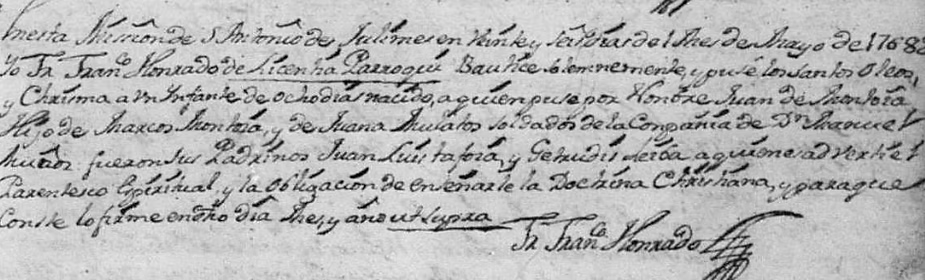
When a person was serving or had served in the Spanish militia, it was usually noted in the baptism, marriage and the burial records of the Catholic church. Some of them simply note, "soldado" next to the name. Other records contain information such as rank, position, the company to which they belonged as well as the presidio to which they were assigned. The best records, in my view, are those that indicate that a soldado(s) is from a different presidio sometimes hundreds of miles away. In this case, you have been handed a significant lead that indicates this person's records may well be in a completely different location than where you have been searching. As an example, look at the record below. This marriage record contains the names of 3 soldiers from 3 different presidios, one of them being the groom from Presidio del Norte. Why would the other two soldiers have traveled so far to attend a wedding? To me, it indicates that they might have served together previously at the same location and had become close comrades. Perhaps the groom was originally from the area of one of the other presidios. Either way, if any of these individuals were targets for your search, the next step would be to locate the parish records nearest these other locations and try searching for the individuals there.


If you want to dig deeper into your Mexican ancestry, do yourself a favor and take some time to understand the role that presidios played in the defense and safety of Spanish territorial claims. During the 300 years of Spanish conquest of the Americas, the Spanish Crown commissioned over 200 presidios. Over those 3 centuries, new presidios were constructed and others de-commissioned, on and off, throughout the Spanish colonial period. In most cases, presidios were started with existing militia members from other locations, some of which may have been hundreds of miles away. Others were completely relocated as in the case of the Presidio at San Carlos. It was built in 1773 as part of a plan to relocate the entire Presidio de Cerrogordo, including personnel, to San Carlos (now known as Manuel Benavides). These two locations were more than 300 miles apart which was a considerable distance to move that many people and that much cargo. It is probably safe to say that many of the "soldados" that transferred to San Carlos, only 6 miles from what is now the Texas border, would have records in one of the southern Chihuahua parishes, possibly even Durango. Once again, a significant lead if you are searching for history on any soldiers who served in San Carlos during this time.
Presidio del Norte undoubtedly started with existing soldiers transferred from various locations, much like the others. To my knowledge, there are no specific records that have been discovered that provide a list of the first soldiers stationed there; however, I have managed to amass a list of soldiers that were assigned there at different points in time beginning in the 1760's. What do we know about Presidio del Norte? Let's have a look:
Brief History: If you are like me, with ancestors that entered the U.S. through the Texas/Mexico border, your eventual path to the United States may have begun with a war council meeting that took place in Mexico City on July 31, 1757. (I really wish I had been invited to that meeting!) This particular meeting was held to discuss the dangerous living conditions associated with populating and protecting the Spanish missions and families, who had made the La Junta area their home, from the "Yndios barbaros". Keep in mind that the Spanish needed people to settle and populate all of the areas that they wanted to occupy, which included the harsh desert lands of today's northern Chihuahua. Without safety and security, people would not be inclined to stay and would eventually leave, making it more difficult for Spanish expansion northward. One of the outcomes of that meeting was a decision to build a presidio in the La Junta area and the man tasked with carrying out the plan for the new presidio was Captain Alonso Rubin de Celis. After a couple of unsuccessful attempts by him and his troops to complete the plans for the fort, leadership was transferred to Captain Manuel Munoz. Under his leadership, the presidio was founded in December 1759 and was commissioned with one Captain, 6 officers and 43 soldiers along with their families.
The presidio was completed in July 1760 at the confluence of the Rio Grande and the Conchos rivers near present-day Ojinaga in an effort to provide safety and security to the missions and to the people of that area. It would be called, Real Presidio de Nuestra Senora de Bethlen y Santiago de las Amarillas de la Junta de los Rios Conchos y del Norte**, eventually shortened to Presidio de la Junta de los Rios and finally Presidio del Norte. There, it continued to operate until 1766 when it was ordered to be relocated upriver to Julimes. It operated there until King Charles III of Spain ordered a Spanish citizen by the name of Marques de Rubi, to inspect all of the presidios in the northern frontier of New Spain from the Gulf of California to today's Texas/Louisiana area and to make recommendations for providing a better line of defense against any and all potential enemies. The inspections took place over the next couple of years and the the recommendations were eventually transformed into a "cedula" or royal decree known as the Reglamento of 1772 which prescribed numerous changes to the presidio system. Among the changes was an order to relocate Presidio del Norte back to its original location (Ojinaga-area) where it continued to operate under the Spanish flag until 1821, when the Mexican War of Independence created a sovereign Mexican nation. Even after 1821, the presidio continued to be used as a fort and as a means to protect the local people of the La Junta area from the deadly Indian attacks.
On a personal note, I can safely say that some of my ancestors run right through the heart of Presidio del Norte. Had I not spent time understanding the presidio system, I may not have made some of the connections and perhaps continued searching in some of the wrong places. As important as it was to me individually, I haven't lost sight of the fact that during this time, individuals came together in many different ways and for many different reasons, the military among them, and that there are probably many more stories to be discovered. A seemingly simple relocation of the Presidio del Norte for 7 years meant that church records would be scattered about different parishes or missions, as I have found.
If you would like to know if a member of your ancestry family was a "soldado" at Presidio del Norte, subscribe to my website at the bottom of the homepage texmexgenealogy.com and send me a message.
** "Settlements and Settlers at La Junta de los Rios, 1759-1822", written by Oakah L. Jones in the Journal of Big Bend Studies Volume III 1991.


Comments